Newborn Sleep: What to Expect
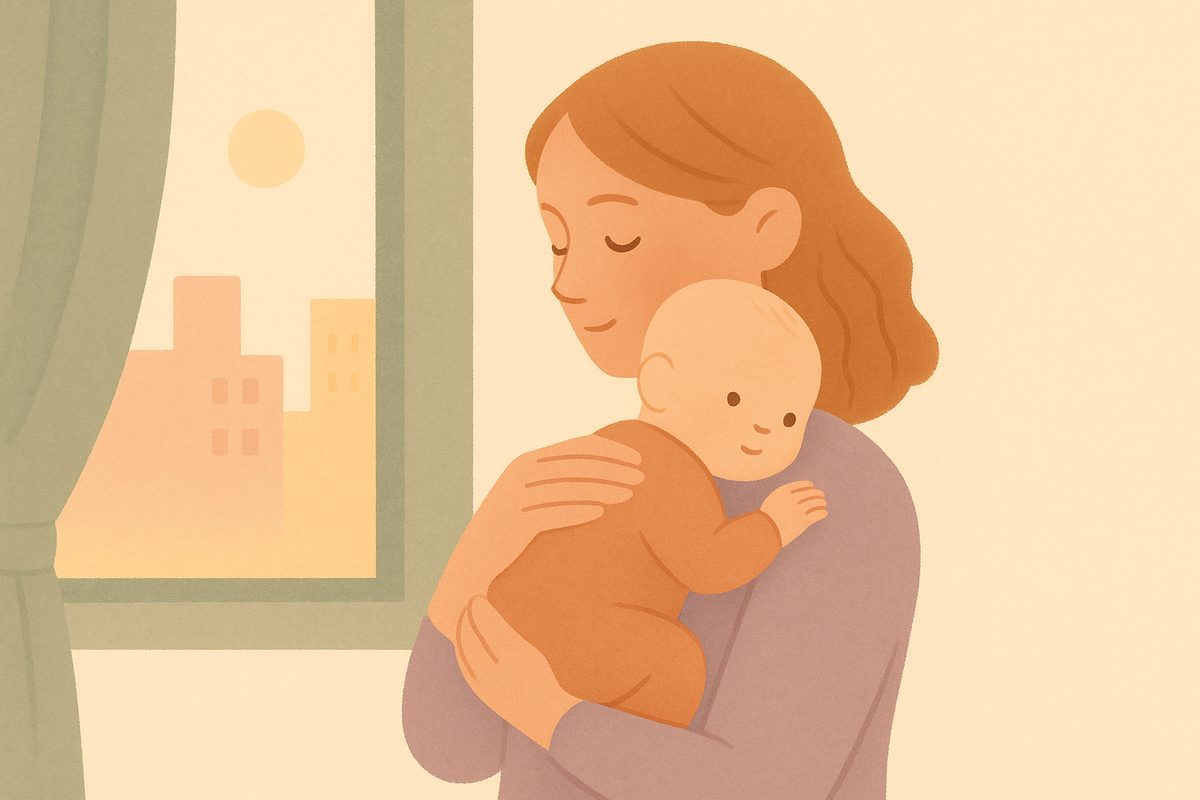
Newborns sleep a surprising amount — typically 14–17 hours in 24 — but rarely more than 2–4 hours at a stretch. If nights feel like a blur of feeding and dozing, that's not a problem to fix; it's newborn biology.
Why newborn sleep is so fragmented
Tiny stomachs need filling every few hours, day and night, and newborns haven't yet developed a circadian rhythm — the internal clock that separates day from night matures over the first 2–4 months. They also spend far more time than adults in light, active sleep, which is noisy, twitchy, and easy to wake from. Grunts, squeaks, and wriggles are normal; you don't need to respond to every sound.
Gently shaping day vs. night
You can't schedule a newborn, but you can send clock-setting signals:
- Keep daytime bright and social — feed in the light, chat, don't tiptoe around normal household noise.
- Keep nights dark, quiet, and boring — dim lights, minimal chat, feed and change calmly, straight back to bed.
- A simple, short wind-down (feed, fresh diaper, swaddle or sleep sack, song) starts building sleep cues early.
- Watch for drowsy cues — staring, jerky movements, fussing — newborns often manage only 45–90 minutes awake.
Protecting yourself
Sleep deprivation is the hardest part of this stage. Sleep when the baby sleeps at least once a day if you can, split nights with a partner where possible, and accept every offer of help. And remember the safety rule that never changes: always place baby on their back in their own clear sleep space.
This intense phase genuinely does pass — most babies consolidate longer night stretches within a few months.
*Always consult your pediatrician for advice specific to your baby.*
Everything in this guide, matched to YOUR baby
Daily play plans, CDC milestones, trackers — and CrySense, which reads your own logs when the crying starts.
Download Bloomie on the App Store